In many companies, the positioning statement lives on one slide of a presentation. It was carefully written after long discussions, and everyone nods when they read it. Then the sales team goes into a meeting, and the customer asks something entirely different: “So why is this better than what we use now?”
For us, that is the moment the real test of positioning begins. A positioning statement doesn’t succeed or fail in the meeting room; it succeeds or fails in the questions on the customer’s mind. In this piece, we want to explain why putting your positioning side by side with customer questions is so instructive.
Positioning is an answer
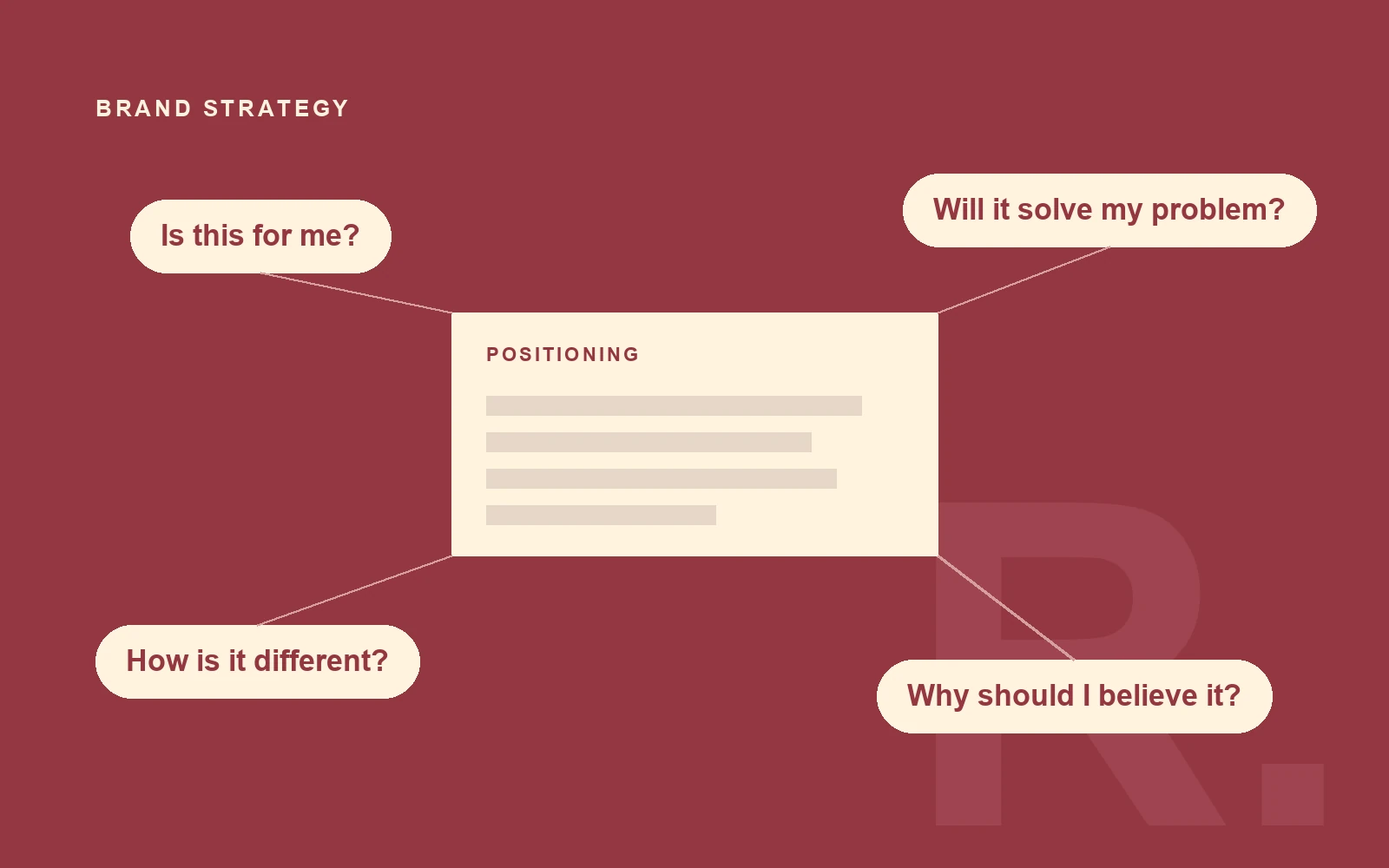
We usually think of positioning as the way a brand defines itself. We see it a little differently: positioning is the answer to a few fundamental questions on the customer’s mind.
Is this for me? Will it solve my problem? How is it different from the alternatives? Why should I believe it? Customers don’t always ask these questions out loud, but they look for an answer to every one of them when they decide. Good positioning answers them simply and convincingly. Every question left unanswered leaves a gap in the customer’s mind, and that gap is usually filled by competitors’ messaging or by the customer’s own assumptions.
The questions have to come from customers
To test your positioning, you first need to gather the questions. The most common trap here is having the team guess them. Questions written at a desk usually reflect how we want to talk about our product, not what customers actually want to know.
The real questions are hidden in sales calls, in emails that arrive before a proposal, in support requests and in the reasons deals were lost. Short conversations with customers who chose you, and with those who didn’t, also tell you a lot. We suggest writing these questions down in the customer’s own words wherever you can. “How much does it cost?” and “Is it worth the budget?” are not the same question; one asks for information, the other for reassurance.
Put your statement next to the questions
Once you have gathered the questions, we suggest setting your positioning statement against them and reading it with fresh eyes. Does the statement answer this question? Can the customer verify the answer it gives? Could a competitor just as easily write the same sentence?
This exercise usually brings a few things to light. You notice that some of the things customers most want to know don’t appear in the statement at all. You see that words like “reliable,” “user-friendly” and “innovative” are adjectives any competitor could use and the customer can’t verify. And sometimes you realize that a feature that matters a great deal to you isn’t on the customer’s radar at all.
None of this means the positioning was badly written. More often than not, it simply shows that it was written from the inside.
A small example
Let’s say a company that sells accounting software to small businesses has this positioning statement: “A user-friendly, reliable solution that simplifies financial processes for SMEs.” It sounds nice. But it struggles when it meets customers’ questions.
A business owner researching this kind of software probably has much more concrete questions in mind: Will my accountant be able to see these records too? Can I issue my invoices here? Can I bring over my old records? Will there be any unexpected costs? The first statement doesn’t directly answer any of them.
If the same company rewrote its positioning starting from those questions, it could end up with a far more concrete statement: “We help small businesses that work with an accountant issue invoices and track expenses in one place, and your accountant sees the same records on their own screen.” Less polished, but much closer to the questions on the customer’s mind.
This example was made up to illustrate the approach; it doesn’t describe a real company.
How are you described out there?
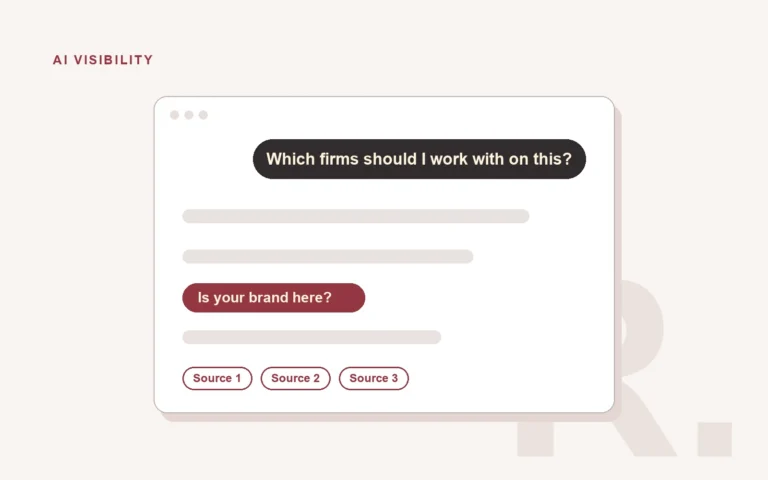
When you test your positioning, we also suggest looking at how your brand is described beyond your own channels. If you ask the questions your customers would ask in a search engine or an AI assistant, you can see how your category is described and which feature your brand is known for.
If that outside view doesn’t match the positioning you wrote internally, that is a valuable finding in itself. The reason is often that the content written about you highlights something else. AI answers work like a mirror here: they show whether your brand is known the way you describe it, or the way others describe it. We cover this in more detail in Where does your brand show up in AI answers?
Positioning is a living thing
Customers’ questions change over time. New competitors, new habits and new expectations come along. That is why we see positioning not as a sentence you write once and frame on the wall, but as an answer that needs to be reread against customers’ questions from time to time.
Perhaps the simplest test is this: read your positioning statement as if you were a customer who has never heard of you. Can you find an answer to the first question that comes to mind? If you can, you are on the right track. If you can’t, it is a good time to start looking for that answer in your customers’ questions.
If you would like to review your positioning together, take a look at our brand strategy work.